
Do Small Businesses Need Cyber Security?
After 28 years in cybersecurity and a career running an MSSP, here is the honest answer to whether small businesses need cyber security — and what it actually costs to ignore it.
TL;DR
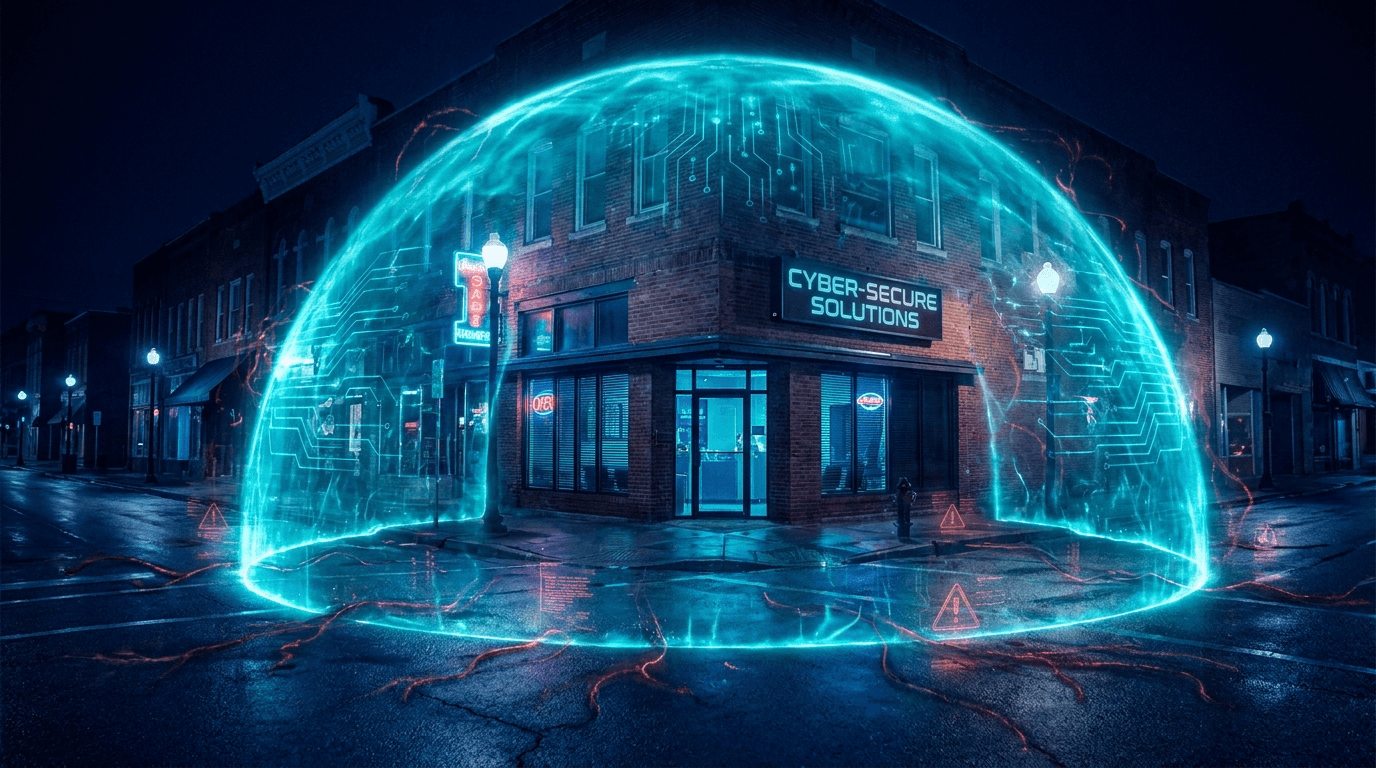
Yes — small businesses need real cybersecurity, not just antivirus. SMBs are now the primary target: 43% of 2025 cyberattacks hit small businesses, the average breach costs about $1.53M to recover before any ransom, and 1 in 5 breached small businesses go out of business.
Key takeaways
- 43% of 2025 cyberattacks targeted small businesses; 55% of ransomware attacks hit companies with fewer than 100 employees.
- 88% of small-business breaches involve ransomware, versus 39% for large organizations.
- Average breach recovery is ~$1.53M before any ransom; 1 in 5 hit SMBs go bankrupt or out of business.
- "Too small to be a target" is a myth — attacks are automated and opportunistic, not hand-picked by company name.
- The rule that never fails: if you won't spend $1 protecting the business, you'll spend $10 recovering it.
I have been asked this question more times than I can count, usually by an owner who already suspects the answer and is hoping I will let them off the hook. I never do. After 28 years in IT and cybersecurity, including years running QMasters, an MSSP that protected enterprises, governments, and banks, I can give you a straight answer. Yes. Small businesses need cyber security. Not the version where you buy an antivirus license and feel better. The real thing.
But the more useful conversation is not whether you need it. It is why so many owners convince themselves they do not, and what that decision costs when it turns out to be wrong.
"We're Too Small to Be a Target" Is the Most Expensive Sentence in Business
This is the belief I want to kill first, because almost every business that gets destroyed believed it right up until the morning it stopped being true.
Here is how attacks actually work. An attacker does not sit at a desk choosing your company by name. They send a mass of phishing emails, sometimes hundreds of thousands at a time. It is a fishnet. They cast it wide and wait for something to bite. They do not care whether the fish that lands is a hundred-person manufacturer or a five-person accounting office. They care that someone clicked. This is exactly how most small businesses actually get hacked.
That is why being small does not protect you. It exposes you. The numbers back this up plainly:
- 43% of all cyberattacks in 2025 targeted small businesses.
- 55% of ransomware attacks hit companies with fewer than 100 employees.
- 88% of small business breaches involve ransomware, compared to 39% for large organizations.
You are not too small to be a target. You are the perfect target. You hold real money and real customer data, but you do not have a security operations center watching your network around the clock. You probably run basic antivirus that has not stopped a serious attack in years. And your IT provider, if you have one, is usually a generalist who is very good at keeping your printers and email working and was never trained to spot an intruder sitting three layers deep in your systems.
Attackers know this better than you do.
I Watched Companies Disappear
I want to tell you what the worst case actually looks like, because the statistics do not capture it.
Over my career I saw companies get fully encrypted and simply cease to exist. Not damaged. Not slowed down. Gone. One day they were running, and then ransomware locked every system they had, and there was no path back.
People assume a bigger company suffers more. It is not true. Once an organization is encrypted, size stops mattering. Recovery takes days, sometimes weeks, of complete paralysis. Nobody can work. Nobody can bill. Nobody can access a single file. The whole business sits frozen while the owner tries to understand whether anything can be saved.
And here is the part that surprises owners the most. The backups they were counting on are often useless. Sometimes the attacker encrypts the backups too, because they were sitting on the same network as everything else. Sometimes the backups were never tested and turn out to be incomplete or corrupted. And sometimes there were no backups at all. In those cases there is nothing to recover from. The organization is not able to come back. It is finished.
This is not rare, and it is not theatrical. One in five small business owners who get hit go bankrupt or out of business entirely. The average recovery cost, before you even factor in any ransom payment, is around 1.53 million dollars. For most small businesses, that number alone is the end of the story.
Why Owners Don't Protect the One Thing That Feeds Them
So if the risk is this real, why do so many owners do so little about it? I have thought about this for years, and the honest answer is uncomfortable.
People protect what they have learned to treat as precious. They insure the building. They lock the doors at night. They put alarms on the house and watch over their children. But the business, the actual engine that brings money home and pays for all of those other things, they leave exposed. They gamble with it in ways they would never dream of gambling with their family.
It is the same instinct, just pointed in the wrong direction. A business deserves the same protection you give the things you love, because it is what makes protecting them possible. When the business goes down, everything downstream of it goes down too.
The Dollar Math That Never Fails
When clients pushed back at QMasters, and they pushed back constantly, it almost always came down to budget. They did not want to spend on something that had not hurt them yet. I understand the logic. It is hard to pay for a fire that has not started.
So we gave them a rule that has held true for my entire career. If you will not spend one dollar protecting your business, you will spend ten recovering it.
The owners who heard that and acted on it are still in business. The ones who decided they would take their chances are the ones who later paid the ten, and some of them paid far more than that, because the recovery cost is only part of the bill. There is also the downtime, the lost customers, the regulatory exposure, the reputational damage, and the months of rebuilding trust, if you survive long enough to rebuild anything at all.
Prevention always looks expensive until you compare it to the alternative. Then it looks like the cheapest decision you ever made.
So, Do Small Businesses Need Cyber Security?
Yes. Without hesitation. The question was never really whether you can afford to protect your business. It is whether you can afford what happens if you do not.
Cyber security for a small business is not about chasing every threat or becoming a security expert yourself. It is about closing the obvious gaps, committing a sensible budget, and staying protected over time instead of treating it as a box you tick once and forget.
What To Do This Week
You do not need to solve everything at once. If you do three things this week, you will be in a dramatically better position than most of the businesses I have watched fall:
- Talk to a cybersecurity expert or a capable IT provider and have them assess your real gaps. You cannot fix what you have not honestly looked at. Spend the money to find out where you actually stand.
- Commit a proper budget and do not be cheap about it. Remember the dollar math. The money you save by underspending now is borrowed against a recovery bill that is ten times larger.
- Treat protection as continuous, not as a one-time project. Threats change every month. The business you secured last year is not the business you are running today. Keep checking, and never stop protecting it.
The Bottom Line
In nearly three decades in this industry, the pattern has not changed. The businesses that survive are not the lucky ones. They are the ones that decided protection was not optional before anything went wrong.
You do not have to become a security specialist to get there. You need partners who already are, working with tools built to actually defend a business like yours rather than just generate a certificate for the wall. That is the exact problem I built Fortress to solve, giving IT providers and MSPs the enterprise-grade security, AI-driven monitoring, and expertise they need to genuinely protect small businesses, without having to become full-time security teams overnight. Talk to the Fortress team if you want help closing those gaps.
Menachem Tauman is the founder of Fortress Cyber and a cybersecurity industry veteran with 28 years in IT and security. He previously co-founded QMasters, an MSSP serving enterprises, governments, and banks.
Explore more: the Channel Enablement OS · see how Fortress protects SMBs

WRITTEN BY
Menachem TaumanCo-Founder & CEO, Fortress Cyber
Serial entrepreneur with 28+ years of experience in cybersecurity and IT. Former CISO who has advised governments, banks, and Fortune 500 companies. Co-founded QMasters, a successful MSSP (exit x1), and pioneered the "Integrative Cyber Defense" approach. At Fortress, he's building the Channel Enablement OS that transforms how MSPs deliver and monetize cybersecurity.
Follow on LinkedIn
Ready to Transform Your MSP?
See how Fortress can help you build a profitable security practice.
Request a Demo